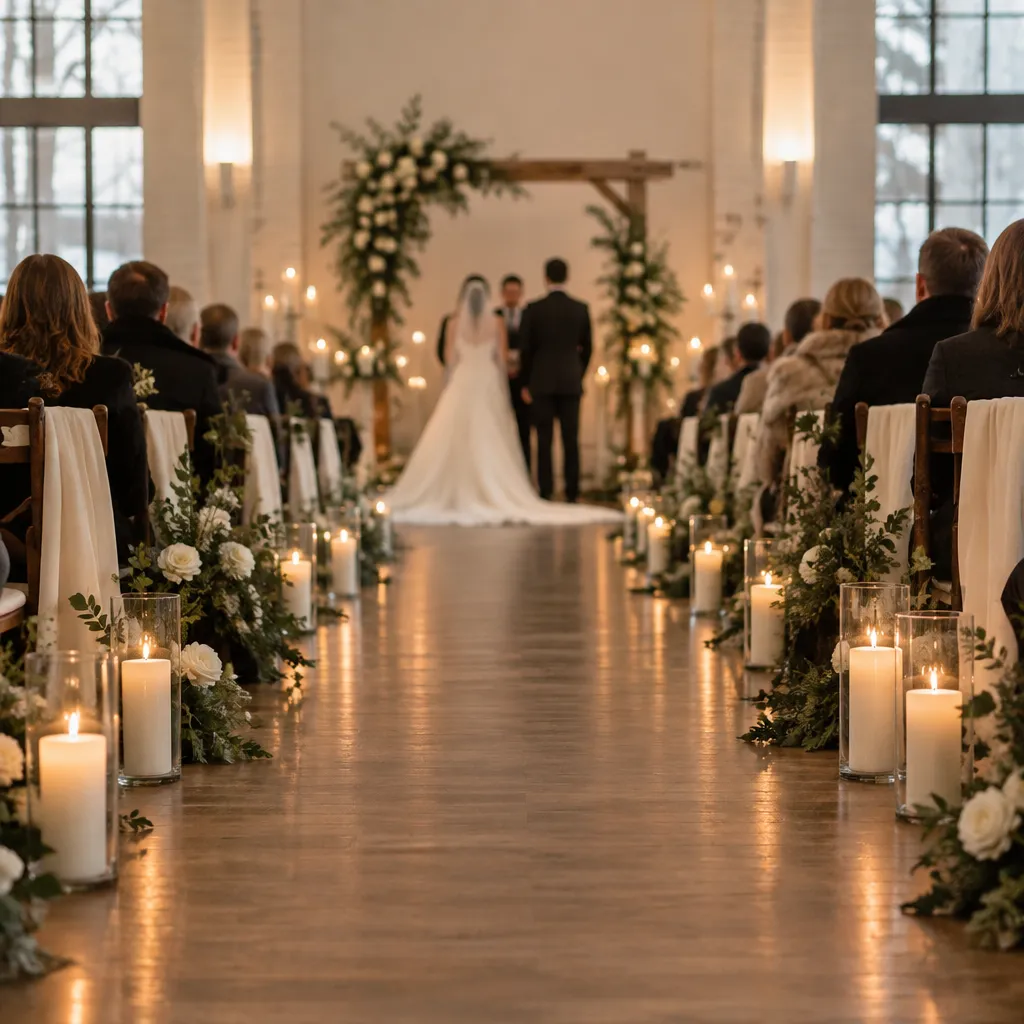
Most couples picture a summer wedding first, then consider a winter date for its calmer calendar or smaller guest list. A winter wedding venue in Bryan, TX can give you a warmer, more intimate ceremony than a July afternoon, but only if the styling is planned for cold air, short daylight, and guests who arrive in heavy coats. In practice, the same mistakes come up every season: candles placed where the wind hits them, florals that wilt in a cold room, and vows that run into sunset. This guide covers how to style your ceremony for the cold months, with the decisions we press couples on before planning gets expensive.
Table of Contents
- Quick Takeaways
- What the Latest Trend Reports Say About Wedding Style
- Choosing a Color Palette for Cold-Weather Ceremonies
- Textiles and Warmth for Winter Ceremonies
- Lighting a Winter Ceremony
- Planning Around Bryan Winter Weather
- Ceremony Flow and Guest Comfort
- Comparing Three Winter Ceremony Setups
- Using the Golf Course Backdrop in Winter Photos
- Working With Your Venue Team on Winter Logistics
- Frequently Asked Questions
- References
Quick Takeaways
|
Key Insight |
Explanation |
|---|---|
|
Build the timeline backward from sunset |
Winter sunsets arrive early, so set the ceremony start time with daylight for vows and portraits, plus a buffer before dusk. |
|
Warm the room with fabric first |
Velvet, wool, and faux fur read as warm and photograph well. Heaters only help where the space and venue rules allow them. |
|
Choose palettes with depth |
Burgundy, forest green, navy, cream, and brass hold up under low light. Pale summer pastels often look flat in overcast weather. |
|
Write a weather trigger before booking |
Name the elements that move indoors if a cold front arrives, and walk through that backup layout with your venue team. |
|
Protect guests before decorating |
Seating away from drafts, a warm entry, blankets, and hot drinks matter more to a cold guest than a centerpiece. |
|
Test florals for cool air |
Ask your florist which blooms and greenery handle chilly temperatures and outdoor handling, and confirm delivery timing. |
|
Confirm open-flame and heater rules early |
Candle, heater, and photo-area rules decide much of the styling, so get them in writing before you order décor. |
What the Latest Trend Reports Say About Wedding Style
The Knot’s 2027 Wedding Trends Report, updated September 28, 2026, frames current direction around personalization and the guest experience. Its editors describe trends as ideas that “stick” with couples, and they say personalization continues to do that. For a winter ceremony, that matters because a personal look usually comes from small, specific choices rather than expensive ones.
The report says its predictions were vetted by a group of wedding vendors and checked against data from The Knot’s own platform through June 2026. We do not treat any trend report as a rulebook. The useful part for winter is the underlying idea: couples want a ceremony that feels like them, not a template copied from a catalog.
Reading trend lists without copying them
Trend lists work best as a starting point for a mood board. A look that suits a bright, open ballroom can feel stark in a cool room with low light. Pick two or three ideas that fit your guest count and your ceremony time, then cut the rest without guilt.
Personal details that survive a cold season
The personal touches that work in winter tend to be textural or sentimental: a family quilt folded over a chair back, a handwritten welcome sign at the guest book, or a short playlist for the walk out. These cost little and sit well against heavier fabrics. Couples often overspend on one statement piece and underspend on the things guests actually touch.
Pro tip: Before you buy any prop, write down the three details that tell your story, then build the ceremony around them. A winter room has less visual space for decoration, so every item should have a clear reason to be there.
Choosing a Color Palette for Cold-Weather Ceremonies
Color does more work in winter than it does in summer. Pastels that look fresh in June can look washed out under overcast January light, so we steer couples toward palettes with more depth. The goal is a room that still looks rich when the sky is gray at 4 p.m.
Deep tones that hold up under low light
Burgundy, forest green, navy, and warm chocolate look rich in candlelight and string lights. They avoid the flat, chalky look that blush and sage can take on in gray daylight. Pair one deep anchor color with a light neutral such as cream or ivory, so the aisle does not feel heavy.
Metallics also change with the season. Brass and aged gold pick up warm light well, while polished silver can look cold against dark fabric. Keep one metal finish across the room, because mixing finishes in the same frame often looks accidental in photos.
Greenery as a winter anchor
Evergreen foliage and eucalyptus keep their color when the weather turns, and they add structure to an arch or the front edge of a ceremony table. The bigger risk is not the cold itself but how the greenery is stored between delivery and setup. Ask your florist how materials will be kept before the ceremony, and whether they will be sprayed or pre-conditioned for the room.
In winter, a palette has to earn its place under the room’s actual light, not just look good on a swatch.
Textiles and Warmth for Winter Ceremonies
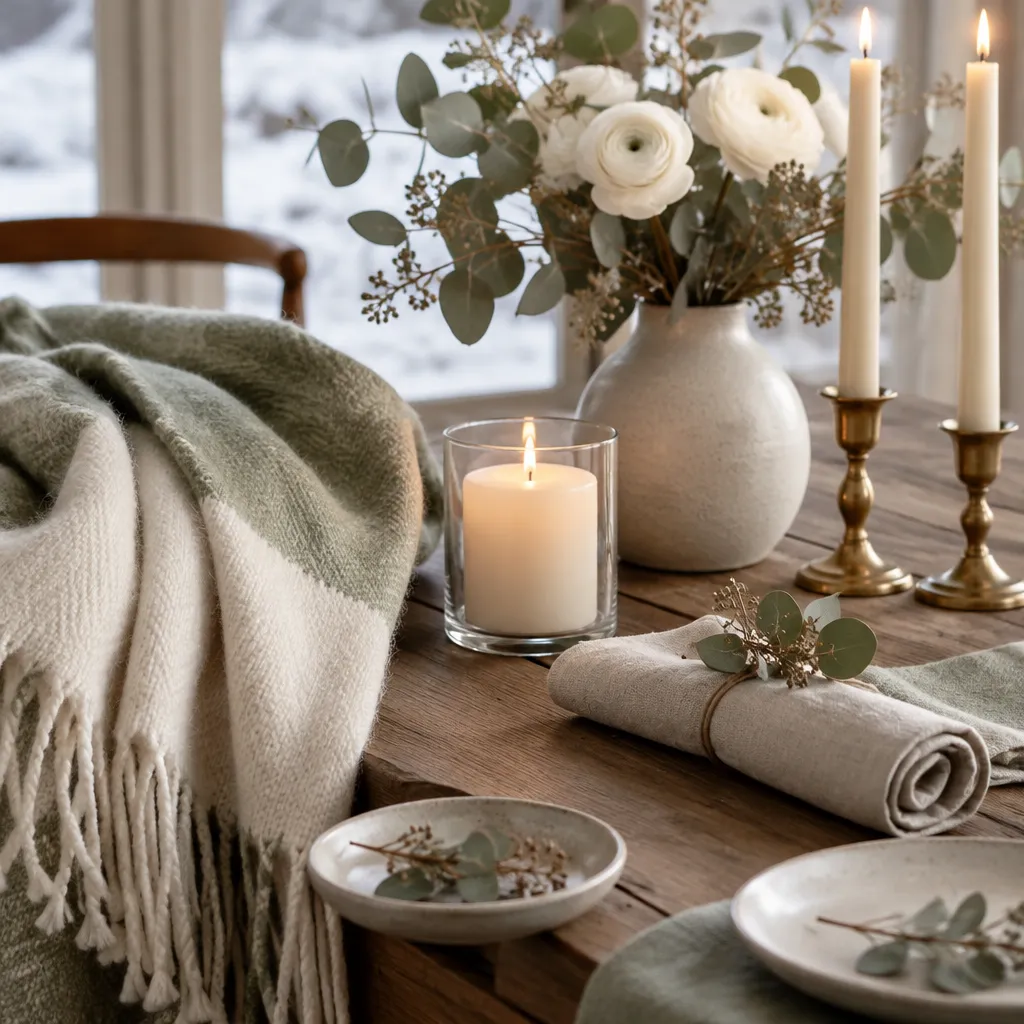
Textiles are the most practical way to make a winter ceremony feel warm. A winter styling guide on polkadotwedding.com recommends plush textiles such as velvet or faux fur, and suggests using heaters or a fireplace where a venue has them. We agree with the first point and treat the second as conditional, since heat sources depend on the room and the rules that apply to it.
Where velvet and faux fur belong
Use these fabrics on chair backs, sashes, a ceremony backdrop, or a single bench near the front. Velvet can look heavy when it covers an entire table, so limit it to a few focal points. A row of deep-toned chair sashes or a faux fur throw on a front seat adds warmth without making the room feel dated.
Keep heavy fabric away from open flames and from the paths guests walk. A velvet runner that brushes a candle is a fire risk and a ruined photo in the same moment.
Layering blankets and linens for guests
Guests feel the cold more than you do, especially during a long ceremony. Offer blankets folded on each row or stacked near the entrance, and match them to your palette so they look intentional. A blanket station by the door reads as a welcome, while a pile of loose throws on the floor reads as an afterthought.
Pro tip: View every fabric at the same time of day as your ceremony. Velvet can look rich in a showroom and flat under the room’s lights, so a daytime sample check can mislead you.
Warmth you can see, from fabric and candlelight, usually does more for a winter room than a heater placed where nobody sits.
Lighting a Winter Ceremony
Light is the constraint most winter couples do not plan for. Sunset comes earlier in the cooler months, so a ceremony that starts late in the afternoon can end in dusk. Build the timeline backward from sunset, not forward from the reception, and let the light decide the start time.
Planning the processional around daylight
Choose a start time that leaves daylight for family photos and the ceremony itself. Ask your photographer which way the low sun will fall at that hour, because light aimed straight at the couple can wash out faces and squint guests. A buffer of about an hour between the start of the ceremony and sunset gives you room if the schedule slips.
Candles, string lights, and fire safety
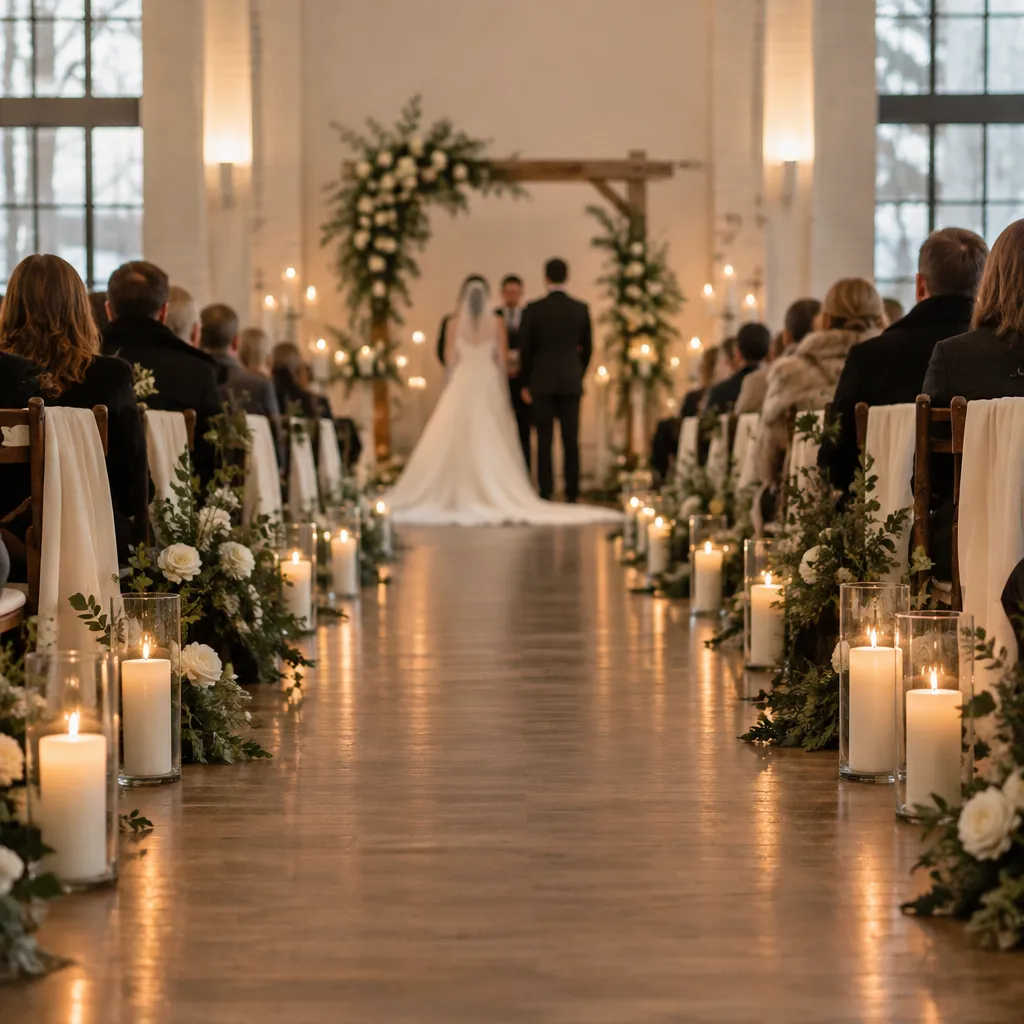
Candles look beautiful, but cold drafts blow them out and open flames near fabric add risk. Use LED candles or enclosed lanterns along the aisle where open flame is restricted, and keep any real flame well away from textiles. String lights are a practical source of overhead warmth, and a timer lets the room brighten at the moment you need it, not twenty minutes early.
Pro tip: Ask for a walk-through at the same time of day as your ceremony. Lighting that looks perfect at noon can disappear once the sun drops, and you want to see that gap while there is still time to fix it.
Planning Around Bryan Winter Weather
Winter weather in Bryan and College Station can change within a few days, and a cold front can drop temperatures quickly and bring wind or rain. A ceremony that depends on one outdoor condition is a gamble. We advise every winter couple to plan for the weather they might get, not the weather they hope for.
Building the backup room before you need it
Decide in advance which elements move indoors if the forecast turns, such as the arch, the signing table, and the front rows. Sketch the backup layout and measure it, because a plan that exists only in your head rarely survives the day. Walk through the indoor version with your venue team so everyone knows the trigger and the steps.
Heaters, outdoor seating, and guest comfort
Outdoor heaters can help, but they need clearance, placement that does not block guests, and approval from the venue. Confirm what is allowed on the grounds before you order anything, because a rental that cannot be placed is just a cost. Keep the outdoor portion of the ceremony short, and let guests move indoors for the longer readings or the vows if the wind picks up.
Pro tip: Send your vendors a one-page weather plan two weeks before the wedding, with a clear yes or no for each element that moves indoors. Vendors who know the trigger ahead of time can reset faster when a front arrives.
Ceremony Flow and Guest Comfort
Winter guests arrive colder, slower, and in heavier clothing. A ceremony flow that works in July can feel rushed in January, because people need a few minutes to shake off the cold and find a seat. Build that time into the entrance rather than hoping guests will manage it.
Seating and the first few minutes
Open seating early and keep the entry warm and easy to read. Guests who stand in a cold lobby for ten minutes are less present during the first readings. Assign an usher to direct people toward the warm side of the room, and keep doors closed between arrivals so the heat stays where people sit.
Hot drinks and a warm welcome
Coffee, cider, or hot chocolate at the entrance gives guests something to hold and sets a warm tone before the ceremony starts. If you are hosting a rehearsal dinner or a meal for out-of-town family, Madden’s Casual Gourmet, the restaurant at the venue, accepts dining reservations and offers takeout and delivery. That is useful when a group needs a dependable meal on a cold night and you want to keep the planning simple.
Comparing Three Winter Ceremony Setups
Most winter couples choose among three ceremony setups. Each one changes your styling budget, your timeline, and how much you rely on heat, so compare them against your guest list and your tolerance for weather risk before you commit to a design.
|
Setup |
Best For |
Main Trade-off |
|---|---|---|
|
Indoor-led ceremony with a warm room |
Guests who need comfort, older relatives, and shorter ceremonies |
Less natural light, so lighting design carries more of the look |
|
Outdoor ceremony with textiles and heat |
Couples who want an open-air backdrop and a mild afternoon |
Weather risk, and heater placement can limit where guests sit |
|
Hybrid, with outdoor vows and an indoor reception |
Couples who want outdoor photos and a warm, relaxed finish |
Two sets of décor and more time moving between spaces |
For most winter couples, we recommend the indoor-led setup with an outdoor portrait window. It keeps guests comfortable, gives you control over light and temperature, and still lets you use the grounds for photos when the afternoon is clear. The outdoor-only ceremony works best when your guest list is small and the forecast is already settled.
Using the Golf Course Backdrop in Winter Photos
The venue sits within Phillips Event Center at Briarcrest, which includes an 18-hole public course, the City Course, designed by Dr. Marvin H. Ferguson. It measures 6,578 yards from the champion tees. In cooler months, the open landscape can give portraits a calm, uncluttered background, though the look depends on the day and the light.
Ask where portraits are allowed
Ask your coordinator which areas of the grounds are open for portraits and whether any path closures will affect your timeline. If the course is in use, plan portraits around tee times so your photographer and golfers are not competing for the same stretch of fairway. Check the details with the venue team early, because a schedule that works on paper can clash with play on the day.
Dressing for wind and uneven ground
Winter portraits on open ground mean wind, uneven footing, and cold hands. Bring flats or low wedges for the bride, and pack a wrap that works in photos as well as on the walk back. Keep the photographer’s shot list short, so you are not walking the full course in heels when the sun is already low.
Working With Your Venue Team on Winter Logistics
The details that fail on a winter wedding day are usually logistics: heater placement, candle rules, delivery windows, and who unlocks which door. Call 979-776-0133 or visit 1929 Country Club Dr. in Bryan, TX 77802 to start that conversation early. You can also review our wedding and event options before your first call.
Questions to ask before you sign
Ask what the room allows for open flame, whether heaters are permitted and where they can go, how early vendors can load in, and whether outdoor photo areas are open that day. Get the answers in writing, because a verbal yes at the tour can change once the calendar fills up.
Sharing one timeline with every vendor
Give the sunset-based timeline to every vendor, not just the photographer. Florists, entertainment, and anyone bringing food in should know the exact moment the ceremony ends so the transition into the reception runs smoothly. A single shared timeline prevents the most common winter mistake, which is a florist arriving after the light has already faded.
Frequently Asked Questions
Can I hold an outdoor winter ceremony in Bryan, TX?
You can, but only with a clear backup plan. Winter weather in Bryan and College Station can change quickly, so name the indoor fallback, confirm what the grounds allow, and decide the trigger point before you book.
How early should I start planning winter ceremony décor?
Start with textiles, rentals, and florals as early as your budget allows. Heavier fabrics and cool-season blooms may need more lead time than summer décor, and confirming those choices early leaves room to adjust.
Are candles allowed at a winter wedding?
Rules vary by venue and room, so check with the venue team before you order. Where open flame is restricted, LED candles or enclosed lanterns give a similar glow without the risk of a draft or a flame near fabric.
What colors work best for a winter wedding?
Deep tones such as burgundy, forest green, and navy work well, with cream and brass as accents. Pale pastels can look flat under overcast light, so test your palette in the room at the time of your ceremony.
How do I keep guests warm during the ceremony?
Offer blankets at the entrance, seat guests away from drafts, serve hot drinks while they arrive, and keep any outdoor portion short. A warm entry does more for guest comfort than any single décor piece.
Does Phillips Event Center host weddings and corporate events?
Yes, the venue hosts weddings, corporate events, and large-scale or intimate gatherings. You can learn more on the weddings and events page or by calling 979-776-0133.
What winter styling choice made the biggest difference at your ceremony, or what would you change if you planned it again? We would like to hear about what worked in cold weather.