
Most people who want to try golf never get past the driving range, because the first real round feels intimidating. You worry about holding up a group, buying the wrong clubs, or stepping onto a course where everyone else seems to know the unwritten rules. If you are searching for a beginner golf course in Bryan TX, the setting you choose for that first round matters more than most newcomers expect. This guide explains why the public 18-hole City Course at Phillips Event Center at Briarcrest suits a first round, and how to handle clubs, booking, and the first eighteen holes without overspending.
Table of Contents
- Quick Takeaways
- Why a Public Course Suits Your First Round
- Choosing Your First Clubs Without Overspending
- Booking Your First Tee Time at The City Course
- Playing Your First Eighteen Holes
- Comparing Ways to Learn the Game
- Refueling After Your First Round
- Frequently Asked Questions
- References
Quick Takeaways
|
Key Insight |
Explanation |
|---|---|
|
Choose a public course over a members-only layout |
The City Course is open to the general public, so you can book a tee time without joining anything or knowing anyone who plays there. |
|
Pick tees that match your game, not your ego |
The course measures 6,578 yards from champion tees. Start from a shorter set of tees and play the full 18 holes at a pace you can sustain. |
|
Buy seven clubs, not a full set |
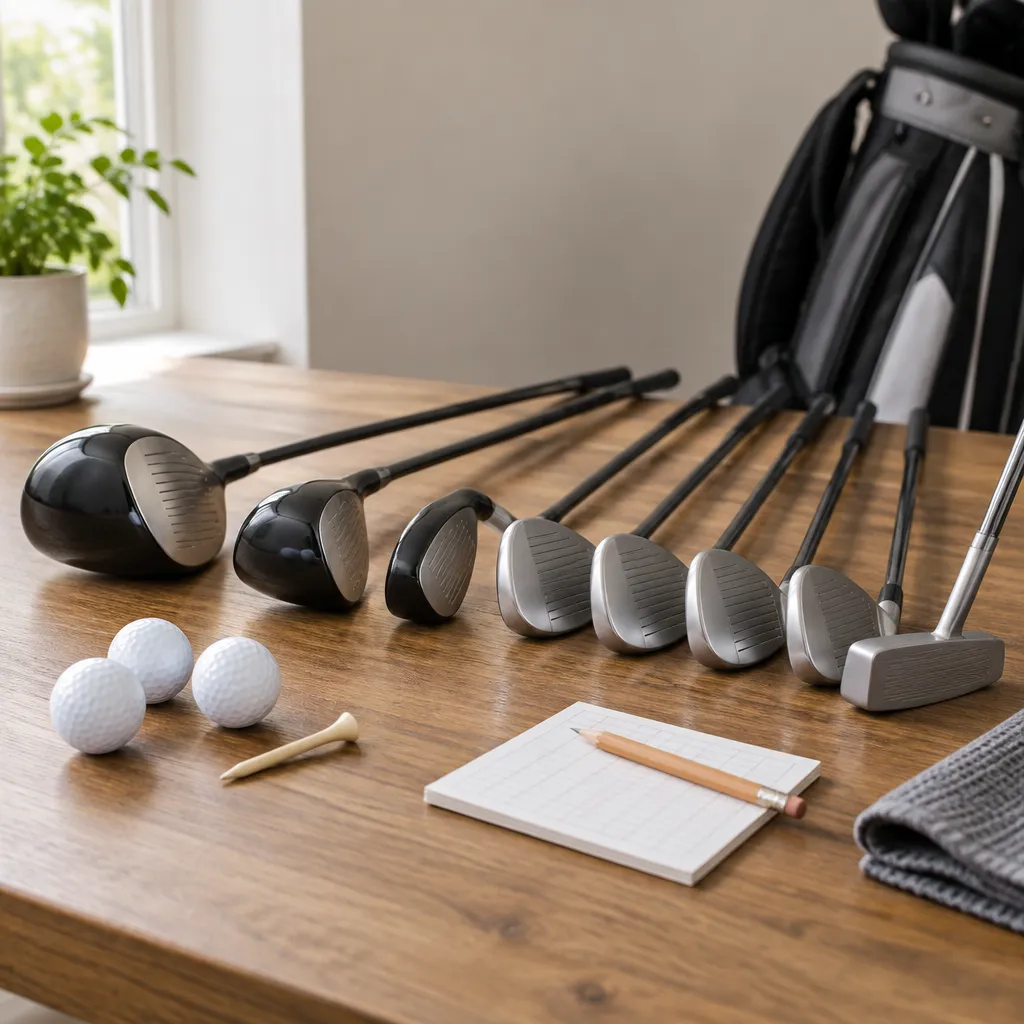
A driver, putter, sand wedge, 6-iron, 8-iron, pitching wedge, and a fairway wood or hybrid cover most early rounds. Your bag can hold 14, but you will not use them all. |
|
Test shaft flex before you spend money |
Hit a 6-iron in regular and stiff flex. The one that feels easier to control is the flex you should start with for every club. |
|
Check the event calendar before you pick a day |
Tournament pages on the venue site list shotgun starts with the course closed until early or mid-afternoon. A first round on a closed morning is a wasted drive. |
|
Confirm your tee time by phone |
Call 979-776-0133 to check availability and ask whether any event affects your day. Specific questions get faster, more useful answers. |
Why a Public Course Suits Your First Round
A first round works best on a course where nobody expects you to know the etiquette yet. Many traditional clubs assume members who have played for years, which can make a beginner feel like an outsider before the first drive. The City Course at Phillips Event Center is different because it welcomes the general public, so you can book a tee time without joining anything.
No membership hurdle to clear
Public access changes how a beginner feels on the first tee. You do not need a sponsor, a referral, or a membership history to reserve a time, and nobody checks whether you have a handicap card. That matters if you have only ever hit balls into a backyard net and want a real course to test your swing.
The location helps too. The venue sits at 1929 Country Club Dr., Bryan, TX 77802, centrally positioned between Bryan and College Station. If you live in either city, you are not driving across the Brazos Valley to find your first tee, and you can make the trip on a weekday without rearranging your whole afternoon.
Eighteen holes designed by Dr. Marvin H. Ferguson
The City Course is an 18-hole layout designed by Dr. Marvin H. Ferguson, and it measures 6,578 yards from champion tees. That number looks daunting on a scorecard, and it should. Champion tees are built for low-handicap players, so your first visit should start from a shorter set of tees.
In my view, a full 18 holes is a better first experience than a short warmup loop for most people. A few holes can teach you the swing, but a full round teaches you how to manage the walk between greens and tees, how to recover from a bad hole, and how to keep your focus after the sixth or seventh hole. Those are the skills you will need once the game starts to feel familiar.
A practical goal for round one is to finish feeling you could do it again next weekend. Pick tees that let you reach most greens in two more or less controlled shots, and accept that you will still lose a few balls. A round you enjoy beats a round where you chase a score you cannot yet control.
Choosing Your First Clubs Without Overspending
Equipment is the fastest way for a beginner to overspend. Golf shops are full of drivers, irons, and hybrids with bold marketing attached, but a first round rewards consistent contact far more than the latest model. You can learn the game with a small, forgiving set and upgrade only after you know what you need.
The seven clubs a beginner actually needs
Golf Digest’s beginner guide recommends starting with a driver, a putter, and a sand wedge, supplemented by a 6-iron, an 8-iron, a pitching wedge, and a fairway wood or hybrid with 18 to 21 degrees of loft. That is seven clubs, not the 14 your bag is allowed to hold. The guide notes that these clubs are among the most forgiving and easiest to get airborne.
The sand wedge is the one most people get wrong. The guide describes it as the club with an “S” on the sole or a loft of 54 to 56 degrees. If a shop clerk offers you a lob wedge and a gap wedge in the same breath, politely ask to start with the sand wedge and the pitching wedge instead. Your early scores will depend more on getting the ball out of the sand and onto the green than on hitting it far.
At the beginning, make learning, and not buying, your priority.
Mike Stachura, Senior Editor of Equipment, Golf Digest
Testing shaft flex before you buy
Golf Digest suggests trying a 6-iron with both a regular-flex and a stiff-flex shaft at a larger shop or range. Faster, more aggressive swings usually prefer a stiff shaft, but the one that feels easier to control is the flex to start with for every club. Do this test before you buy, not after your first bad round.
A common mistake is buying custom-fitted clubs before the swing is stable. A club fitting is valuable once you can make consistent contact, because it measures what you actually do. A beginner who gets fitted early is paying for numbers that will change as the swing improves.
Pro tip: Do not buy a full set on your first visit. Borrow or buy used clubs for your first two or three rounds, and write down which shots you miss most often. Those misses tell you what to upgrade, and sometimes they tell you nothing needs upgrading at all.
Booking Your First Tee Time at The City Course
Booking is simple, but beginners often make one timing mistake: they pick a day without checking the event calendar. The venue hosts tournaments and private events, and on those days the course may not be open for casual play. Checking first saves you a wasted drive and a disappointing morning.
Read the tournament calendar before you pick a day
Tournament pages on the venue website show how these days run.
Other events follow the same pattern. Check the BGA Tournament (September) page or the BGA Tournament (February) page before you commit to a weekend, because tournament days can affect both your start time and the pace of the course. A quiet weekday morning is almost always the easiest first round.
Call with specific questions
Call 979-776-0133 before you travel. Ask whether the course is open on your preferred day, what the first available tee time is, and whether an event affects that morning. Specific questions get specific answers, while a vague question like “Is it busy?” tends to get a vague reply.
Aim for an early tee time when you can. Beginners often play more slowly than regulars, so a morning start gives you room to finish without a group waiting behind you. It also gives you time to adjust to the course before the afternoon heat sets in.
Pro tip: Arrive early enough to check in, hit a few practice swings, and settle your nerves before the first tee. Rushing from the parking lot is one of the quickest ways to start your first hole badly.
Playing Your First Eighteen Holes
The first hole is where most beginners lose their nerve. Your stance feels off, your practice swing looks fine, and then the group behind you appears on the tee. The way through is a simple routine you can repeat on every shot, so the round stops feeling like a test you could fail in public.
Pick a target and a realistic score
Set a target that measures progress rather than perfection. For a first round, a good goal is to finish all 18 holes, count every stroke honestly, and notice which situations cost you most. The number on the card matters less than the patterns you see across the round.
The most common mistake is trying to hit every fairway with a driver. A fairway wood or hybrid off the tee keeps the ball in play and saves more strokes than a heroic swing that ends in the trees. Beginners who accept a shorter club on tight holes usually score better over time.
Pace and etiquette you can learn in one round
Keep up with the group in front of you, rake bunkers after you play out of them, and replace divots. Stand out of your playing partners’ line of sight when they swing. These habits matter more on a public course, where groups vary in experience and everyone wants a steady pace.
Ready golf is a good habit when your group agrees to it. If you are away and you are ready to play safely, you can hit before it is your turn. Ask your partners at the first tee how they want to handle it, so nobody is surprised on the second hole.
Keeping score without the stress
Use a simple scorecard and write down the club you hit off each tee for your first three rounds. Patterns show up quickly. You may see short misses to the right, or chips that always stop short of the hole. Those notes will guide your practice more effectively than a generic lesson plan.
Pro tip: Play your first round with someone more experienced, and ask them to point out one habit that slows the group. Pace problems are often easier to fix than swing problems, and fixing them early makes the rest of the round more enjoyable.
Comparing Ways to Learn the Game
A first round is one way to learn the game, but it is not the only option. Other formats suit different goals, and the right choice depends on whether you need confidence, fundamentals, or a relaxed afternoon outdoors. The table below compares three options for beginners in Bryan-College Station.
|
Option |
Best For |
Main Trade-off |
|---|---|---|
|
Full 18-hole round on the City Course |
Learning course management, pace, and real lies in grass, sand, and trees |
Takes the longest time and brings the pressure of a real scorecard |
|
Golf simulator session |
Practicing your swing in controlled conditions, including on days when you want to stay indoors |
Does not prepare you for wind, slopes, or uneven lies on a live course |
|
Golf course tour |
Seeing the layout, hazards, and green locations before your first tee time |
Walking the course does not replace hitting shots, so it works best as a starting point |
In practice, my advice is to walk the layout or take a course tour first if the first tee makes you anxious, then book a real round. Use the golf simulator for swing basics when the weather turns or when you want repetition without a partner waiting. Mixing the two approaches usually builds confidence faster than repeating either one alone.
Refueling After Your First Round
Eighteen holes takes long enough that you will be hungry by the back nine. Plan your meal before you tee off, not after, so you do not sit in the parking lot deciding where to eat while your legs are still tired. A planned stop also gives your group a natural place to talk through the shots that felt good.
Dining at Madden’s Casual Gourmet
Madden’s Casual Gourmet is the newest select eatery in Bryan-College Station, and it is the restaurant at the venue. It is a practical place to recap a first round, especially if you want to compare notes on the holes that gave you trouble. Because the course and the restaurant share a location, you do not need to drive somewhere else to finish the day.
Takeout, delivery, and reservations
If your group wants to eat at home, Madden’s offers takeout and delivery. For a group that plans to stay after the round, make a dining reservation so you are not waiting for a table after a long afternoon. Booking ahead is the simplest way to keep a first-round celebration from turning into a wait.
Frequently Asked Questions
Do I need to be a member to play the City Course?
No. The City Course is an 18-hole course open to the general public, and the venue welcomes the public rather than limiting play to members. You can book a tee time by calling 979-776-0133.
How many clubs does a beginner need for the first round?
Seven clubs cover most early rounds: a driver, a putter, a sand wedge, a 6-iron, an 8-iron, a pitching wedge, and a fairway wood or hybrid with 18 to 21 degrees of loft. Start there and add clubs only when you find a clear gap in your game.
Where is the City Course located?
The venue is at 1929 Country Club Dr., Bryan, TX 77802. It is centrally positioned between Bryan and College Station, which makes it convenient for golfers living in either city.
How long is the course, and which tees should a beginner use?
The City Course measures 6,578 yards from champion tees. Beginners should choose a shorter set of tees for their first round so the walk and the shot distances stay manageable.
How do I avoid booking a day when the course is closed?
Check the tournament pages on the venue website before you choose a date, then call 979-776-0133 to confirm availability and whether an event affects that day. A weekday morning is usually the least crowded option for a first round.
Can I eat at the venue after my round?
Yes. Madden’s Casual Gourmet offers dining, takeout, delivery, and reservations, so you can plan a meal before you tee off or order to go afterward.
What was the hardest part of your first round, and what would you tell a friend who is thinking about trying golf for the first time?